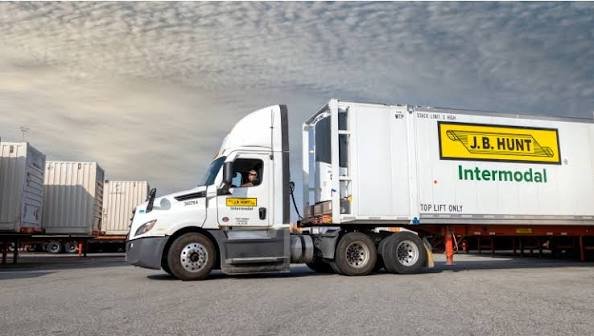
If you’ve spotted headlines or social media chatter about J.B. Hunt shutting down, pause before you worry. Let’s cut through the noise and focus on facts. J.B. Hunt Transport Services, Inc. is a major name in the trucking and logistics sector, serving countless businesses nationwide. While the company is making tough choices—like closing one of its facilities and trimming staff—there’s no credible sign that J.B. Hunt is going out of business.
Here’s a clear, step-by-step look at what’s happening, what it could mean for you, and how to interpret the current news calmly and confidently.
J.B. Hunt At A Glance: Stability Amid Change
Founded in 1961 and publicly traded (NASDAQ: JBHT), J.B. Hunt moves goods for everyone from retail giants to smaller companies. Its services cover intermodal (rail/truck), final-mile delivery, and dedicated freight. With more than $12 billion in annual revenues, this is not a small operation at risk of vanishing overnight.
From time to time, you hear about facility closures or layoffs in reports. But these changes are not uncommon in logistics. In slow freight markets, almost every carrier will tighten costs, close less-profitable locations, and look for operational efficiencies.
What Is Actually Shutting Down? (And What Isn’t)
Let’s get specific. The buzz started when J.B. Hunt issued a WARN notice: it plans to close its facility at the Home Depot Distribution Center in Lithonia, Georgia. Here’s how this pans out:
Roughly 74 jobs are impacted by this closure, effective October 27, 2025.
Affected employees were given the legally required 60-day notice.
The company mentioned “changing business conditions” as a key reason.
If you’re running a business or a fleet, you’ll see that tactical closures like this help companies adapt, especially when freight volumes dip. In general, these layoffs allow for transfers. J.B. Hunt encouraged impacted workers to seek open positions elsewhere in the organization—a common practice among large employers.
So, while this closure is real, it is not a sign of company-wide collapse. Instead, it reflects J.B. Hunt responding to market shifts—something responsible companies do during slow cycles.
Digging Into The Numbers: Financial Health
It’s fair to be concerned about any business facing layoffs or closures. However, up-to-date financial results help put these changes into context:
Q4 2024: Revenue reached about $3.15 billion, slightly down year-over-year. Still, operating income grew by 2%, and earnings per share (EPS) climbed by 4%.
Full-year 2024: Overall revenue was $12.9 billion, with both operating income and EPS moderately below 2023 levels.
Management discussed a $90 million expected decline in 2026 revenue due to a lost appliance delivery contract—not as a crisis, but as something to plan for.
You may notice these numbers show resilience. While lower growth is a concern, J.B. Hunt remains profitable and is actively controlling expenses. It even delivered an earnings “beat” that led to stock gains—a positive sign investors still see underlying strength.
For your own cash flow planning, consider this a reminder to review income streams frequently and adjust spending early when revenue softens. Companies like J.B. Hunt do the same.
Cost Reduction, Layoffs, And Why They Happen
If you see news about layoffs, it’s tempting to worry about bigger trouble brewing. Here’s what’s actually behind this:
Since the beginning of the freight recession, J.B. Hunt has reduced its headcount by about 1,000 workers (2023 into 2024).
Final-mile delivery segments (think home appliance drop-offs) have been especially pressured—operating income dropped nearly 60% and revenue about 10% year-over-year.
Actions like these help preserve cash and keep business units viable when demand slows. For business owners, this points to the value of understanding your profitability segment-by-segment. Don’t hesitate to assess which services generate losses and consider whether to downsize or pause them.
It’s rarely easy to make these calls, especially when people’s jobs are involved. But in a tough market, proactive steps today can help you sustain your business and remain solvent.
What Management Is Saying: Risk, Challenges, And Recovery
J.B. Hunt’s leadership has been pragmatic on recent earnings calls and in conversations with analysts. You’ll hear phrases such as “controlling the controllable,” “prioritizing safety and cost discipline,” and “leveraging investments in people, technology, and capacity.” These aren’t platitudes—they reflect a mindset of steady, incremental adaptation when outside conditions are tough.
You may need to run leaner, just as they are. J.B. Hunt’s leaders describe the current freight market as unusually soft, with slow contract renewal rates and weak volumes. However, there are hints of stabilization, particularly on some contract freight sides.
When thinking about your own outlook, consider their approach: Remain cautious, but keep focusing on long-term value and readiness for eventual recovery. Don’t overreact to short-term headwinds.
Rumors, Reality, And The Bigger Picture In Trucking
Much of the panic comes from confusion between J.B. Hunt’s cost-cutting and actual business failures seen elsewhere in the industry. Over the past couple of years, several high-profile trucking companies have filed for bankruptcy or shut down suddenly.
These stories sometimes swirl together in the media. A facility closure at J.B. Hunt may be mentioned right next to a report of, say, a Chapter 7 bankruptcy at a smaller carrier—without clearly separating the facts.
If you hear “J.B. Hunt bankruptcy” rumors online, check for specifics. To date, no credible financial press or government filing reports that J.B. Hunt Transport Services, Inc. has filed for bankruptcy or intends to shut down across the board. Most of the chatter draws on misunderstood facility closures or misquotes from broader trucking sector news.
In other words: Set aside time to verify sources and watch for alarmist posts that aren’t backed up by factual, recent company statements.
J.B. Hunt’s Current Status: Big Player, Still Operating
If you’re partnering with J.B. Hunt, using their brokerage, or considering their freight services, you’re working with a leader in U.S. transportation and logistics. The company remains headquartered in Lowell, Arkansas, and employs thousands across intermodal, dedicated, and last-mile services. Each quarter, it files detailed earnings reports, conducts public analyst calls, and issues news releases watched closely by Wall Street.
Financial analysts, journalists, and regulators would immediately report any sign of bankruptcy or total shutdown. Yet as of now, all authoritative reporting points to a company in transition, not in crisis.
The bottom line for small-business owners and logistics-dependent founders: J.B. Hunt’s changes reflect nimble management in weak markets, not an existential threat. If you want ongoing insights into financial stability and operational risks, sources like annual reports, quarterly conference calls, and reputable business outlets (including [Digital Business Mag](https://digitbusinessmag.com/)) are your best friends.
Takeaways For Your Planning And Risk Management
How should you factor this news into your own business planning? Here are some principles that apply for both transport users and logistics entrepreneurs:
- Monitor Key Partner Health: Keep an eye on core suppliers (transport providers, freight brokers) for early signs of bigger trouble—not just layoffs but missed payments, delayed services, or rapid leadership shifts.
2. Diversify When Possible: If business continuity is critical, don’t depend on a single carrier or route. Build redundancy into your logistics processes.
3. Stay Informed With Reliable Data: Watch company filings and authoritative news. Set aside time each quarter to review updates.
4. Be Proactive, Not Reactive: When you see a vendor cutting costs or shuttering facilities, ask questions—but don’t panic unless warning signs accumulate.
For example, if your vendor closes one facility but continues national operations, that’s typical cost control. On the other hand, if payments slow down across the board, you may need a backup plan.
Looking Forward: Stability, Strategy, And Long-Term Thinking
J.B. Hunt is not alone in trimming costs right now. The entire logistics sector is under pressure from a prolonged “freight recession”—essentially a cyclical market downturn with less shipping demand, stiffer competition, and lower rates. Strategic cost adjustments now position companies to endure these periods and scale up again when freight rebounds.
If you run or rely on logistics business, you may want to use this period to:
Tighten your own expense controls
Reevaluate underperforming services or lanes
Invest in efficiency and data (such as route planning technology)
Build up a modest cash reserve for bumps ahead
Ultimately, the real risk lies in ignoring early signals, overextending during slowdowns, or failing to plan for cycles. Even leaders like J.B. Hunt make tough calls in downturns, and so should you.
Conclusion: J.B. Hunt Is Still In Business—And So Is Your Opportunity
To close, here’s what you should know: J.B. Hunt remains a large, reportedly profitable transportation and logistics company, actively managing through a tough market. Facility closures like the one in Georgia are targeted and strategic—not evidence of collapse.
Set aside time to check sources before making operational changes or revising partnership plans. The signals from J.B. Hunt’s management, their open financials, and ongoing activity show a company adjusting with care, not retreating from the industry.
If freight conditions recover (as they often do), expect companies that managed expenses wisely—like J.B. Hunt—to benefit first. As an entrepreneur or small business, that’s a lesson worth applying: Lean times test your adaptability, but they don’t have to mean the end of your business or your growth. Instead, focus on prudent decisions, monitor your key partners, and prepare to move forward with confidence.
Read Also: